CENTRE FOR SANITATION AND HEALTH PROMOTION (CENSAHEP) UGANDA

My photo
Kampala, Central, Uganda
Mobile:+256(0) 772 662 062 Email:lukaaya@yahoo.com OR censahepuganda@gmail.com

Monday, March 31, 2014

A recipe for good health: safe water and sanitation

Patricio V. Marquez's picture 

 
On the eve of World Water Day (March 22), there is some good public health news that is unrelated to medical care for the “sick,” but to a critical investment that makes people healthier and more productive, and promises a higher quality of life, particularly among the poor.

The 2012 UNICEF/World Health Organization report, Progress on Drinking Water and Sanitation, says that at the end of 2010, 89% of the world’s population, or 6.1 billion people, had access to improved drinking water. This means that the related Millennium Development Goal (MDG) has been met well ahead of the 2015 deadline. The report also predicts that by 2015, 92% of people will have access to better drinking water.

But, the not-so-good news is that only 63% of the world has improved sanitation access, a figure projected to increase only to 67% by 2015, well below the 75% MDG aim. Currently 2.5 billion people lack improved sanitation.  The report also highlights the fact that the global figures mask big disparities between regions and countries, and within countries (e.g., only 61% of the people in Sub-Saharan Africa have access to safe water).

Should this news matter to public health types like me who work with health systems, who are not sanitary engineers? 

The answer is a definite yes, since improving water and sanitation systems is a necessary complement to primary health care services and targeted nutrition interventions for reducing deaths and ill health in rural and urban slums where the poor concentrate. Unsafe drinking water, inadequate availability of water for hygiene, and lack of access to sanitation together contribute to about 88% of deaths from diarrheal diseases, or more than 1.5 million of the 1.9 million children under age 5 who perish from diarrhea each year. This amounts to close to 20% of all under-5 deaths and means that more than 5,000 children are dying every day as a result of diarrheal diseases.

The dilemma for the international community is simple: Are we going to wait to treat sick children in newly renovated health clinics offering drug therapy and keeping them in costly hospital beds, or should we channel scare resources to building sustainable safe water and sanitation systems that prevent kids from getting sick?

Working in rural areas high in the Andes of my native Ecuador, I saw how improved access to safe water and sanitation alone could significantly reduce diarrhea-related morbidity combined with hygiene awareness and the use of latrines, safe disposal of feces, and hand washing. And regular vaccines and basic health checkups and proper nutrition, particularly to deal with children’s Iron, Iodine, and Vitamin A deficiencies, help eliminate much of the infectious diseases burden.

While we should rejoice about the good news on World Water Day 2012, we also should heed the example of John Snow, one of the pillars of modern public health, who in the mid-1800s successfully demonstrated that the removal of pumps that supplied contaminated water controlled the cholera epidemics that were common in London at the time. By applying our public health knowledge about how infectious diseases are diffused and spread within communities, we could make a major and lasting impact by working together with our water and sanitation colleagues to tackle the source of these diseases, rather than just their symptoms.

Related
Blog: Global Sanitation Targets Risk Missing the Mark on Hygiene and Health Linkages
 

Uganda: Improving hygiene and sanitation in Masaka


Posted on November 25, 2010 by westerhof | Leave a comment

A team of volunteers from the United States has spent four months constructing latrines, building protected springs and washing-stations as well as providing training in hygiene and sanitation in Masaka District. The Union of Community Development Volunteers (UCDV) from Utah State has constructed 60 protected springs, 16 school latrines, 10 washing stations, and has also donated water tanks to 15 schools.

UCDV has also built 25 pit latrines for families in Katoogo Village in Buwunga Sub-county and given out 500 pit latrine slabs to other families. “We gave out the slabs after making sure we had trained several of them to build pit latrines, and we expect them to share the skills with the others,” said Mr Eddy Mutebi, Director of UCDV.

Only 23 per cent of the homesteads in Katoogo Village had pit latrines before the volunteers’ intervention. About 75 local volunteers have been trained in general hygiene and sanitation practices and they are expected to teach other community members about the importance of hand washing, using and keeping latrines clean, as well as drinking clean water.

Mr Mutebi went on to reveal that the different schools and villages where the team had donated water tanks or built protected water springs were recommended by the Masaka District local administration and the department of health. The festivities for officially handing over the items to the local communities took place at St Bruno Primary School, Ssaza on November 19.

Masaka District community officer, Lilian Musisi said the intervention would go a long way to reduce diarrhoeal diseases in the district. She said only 57 per cent of the people in Masaka District have access to safe, clean water, and that only 42 per cent wash hands with soap.

The total cost of the four month intervention was about Shs580m which was collected by members of the Church. Masaka Municipality MP John Baptist Kawanga received the items on behalf of the Speaker of Parliament, Edward Kiwanuka Ssekandi who had been invited as the Chief Guest but could not be present due to other state duties.

Kawanga appealed to the recipient communities to own the donated items and to protect them from vandalism. Elder Lincoln F. Barlow and his wife Marilyn Barlow, Humanitarian Services county director and members of the Church of Jesus Christ of Latter – day Saints attended the function on behalf of the donors.

Source: Michael J. Sali, Daily Monitor, 25 November 2010

Saturday, March 29, 2014

MEDICAL HISTORY---- HYGIENE AND SANITATION

Author: 
 Miguel A. Faria, Jr., MD
Article Type: 
 Feature Article
Issue: 
 Winter 2002
Volume Number: 
 7
Issue Number: 
 4
The word hygiene comes from Hygeia, the Greek goddess of health (photo, below), who was the daughter of Aesculapius, the god of medicine. Since the advent of the Industrial Revolution (c.1750-1850) and the discovery of the germ theory of disease in the second half of the nineteenth century, Hygeiahygiene and sanitation have been at the forefront of the struggle against illness and disease.(1)
Together with the great strides made in improvements in the standards of living provided by free market capitalism, economic freedom, and the advances in scientific medicine --- hygiene and sanitation have resulted in unprecedented longevity, concomitant with markedly improved quality of life in the last century and a half of medical history.
Thanks to these advances, senior citizens, particularly octogenarians, have become the fastest growing segment of our population even though the priority assigned to the prolongation of life span has taken a back seat to other items in health care policy, chiefly the containment of health care costs and "the proper allocation of finite and scarce health resources." Thus, the concept of longevity (from the Latin longaevitas, meaning "long-lived") has been almost abandoned for the new, modern concerns of "useful life span," "the duty to die," "assisted suicide," and so on.
Nevertheless the dramatic extension of life span closely associated with improvement in the quality of life is welcomed news for the American "baby boomers," who have the most to gain from advances in longevity as they age in the first half of the twenty-first century.
In the Middle Ages, the average human life expectancy did not reach into the teen years, not only because of the extremely high perinatal mortality that heavily skewed the data, but also because Europeans (and much of the world during this time) lived in an unhealthy milieu of filth, poor hygiene, and nearly non-existent sanitation. Superstition and ignorance, along with pestilential diseases and vermin infestation, were rampant. Epidemic and endemic diseases such as the bubonic plague, typhus, variola (smallpox), and the White Death of tuberculosis (consumption) took a heavy toll on the population, both young and old.
Sanitation in the Middle AgesDuring the Middle Ages until the mid-nineteenth century cleanliness was just not a priority. The streets in those days were dumping grounds for refuse, and domestic animals including hogs roamed the streets. According to medical historian Howard W. Haggard: "Refuse from the table was thrown on the floor to be eaten by the dog and cat or to rot among the rushes and draw swarms of flies from the stable. The smell of the open cesspool in the rear of the house would have spoiled your appetite, even if the sight of the dining room had not."(2)
There was little improvement in this dire, unhealthy milieu until the mid- to late nineteenth century when the advances of the aforementioned Industrial Revolution and the discovery of the germ theory of disease brought about public health measures that, building upon the importance of good hygiene and sanitation, culminated in the rise of the scientific era of medicine. The heroes and heroines of this age included such notable medical figures as: Edward Jenner (1749-1823), Oliver Wendell Holmes (1809-1894), Ignaz Semmelweiss (1818-1865; photo, right below), Florence Nightingale (1820-1910; photo, left below), Rudolf Virchow (1821-1902), Clara Barton (1821-1912), Louis Pasteur (1822-1895), Joseph Lister (1827-1912), J. Henri Dunant (1828-1910), and Robert Koch (1843-1910).
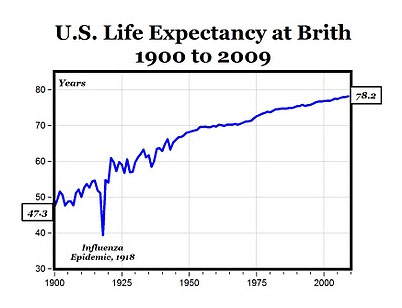
In the words of the surgeons and medical writers Nathan Hiatt and Jonathan R. Hiatt, "The industrial revolution, however, also brought a raised standard of living, with higher wages, Dr. Ignaz Semmelweissimproved nutrition, cheap soap, and inexpensive cotton clothing. Cotton clothing, unlike the louse-ridden woolens worn in the past, could be and had to be washed, thus dispossessing lice and helping to end typhus epidemics. By 1900, improved nutrition, better sanitation, and, especially, contributions from bacteriologists increased life expectancy at birth by almost six years (to age 47.3)..."(3)
Of particular importance in medical history, puerperal fever was one of those diseases that intrigued and baffled doctors in the nineteenth century. You might even remember the famous painting of the illustrious Dr. Oliver Wendell Holmes delivering his famed lecture on the subject to the Boston Medical Society in 1843. Just as Dr. Semmelweiss had predicted, the disease was conquered when obstetricians began washing their hands between deliveries. Puerperal fever was eradicated with cleanliness. Likewise, surgical mortality became acceptable when surgeons began washing their hands and using antiseptic techniques as urged by Dr. Joseph Lister. The scientific tenets of bacteriology and microbiology introduced by Louis Pasteur were finally being applied to obstetrics, medicine and surgery.
Florence NightingaleThe engine behind the drive for hospital reform in the mid-nineteenth century was Florence Nightingale (photo, left). After her tremendously successful humanitarian venture at the Scutari Barrack Hospital during the Crimean War, Nightingale was able to convince the world of the necessity of improving hygiene and sanitation as well as having trained professional nurses tending the sick in the hospital wards. According to medical historian Guy Williams, when she arrived at Scutari "there were plenty of rats, lice and fleas, but there were very few knives, forks, or spoons. Miss Nightingale and her nurses, who were allowed just one pint of water per person per day for washing and drinking and for making tea, [yet]...the ladies' own personal circumstances were hardly hygienic."(4) With hard work and determination, she turned the situation around and by the time she returned to England, she had become a national heroine.
Maternal mortality, a dreaded and common complication of pregnancy throughout the ages, was all but conquered in the West in the twentieth century by a three-pronged attack of public health, particularly the efforts at better hygiene and sanitation; improved obstetrical care, and the use of antibiotics.
The period between 1930 and 1940 saw a sharply rising curve in longevity rates thanks to the widespread usage of antibiotics and the much improved standards in cleanliness, hygiene, and sanitation. Thereafter, further reductions in maternal and infant mortalities were to a significant degree responsible for the tremendous rise in life expectancy. With the conquest of such diseases and scourges of humanity as syphilis, pneumonia, diphtheria, typhoid fever, typhusU.S. Life Expectancy at Birth 1900-2009, and earlier in the century, the old consumptive killer, tuberculosis --- life expectancy climbed from 59.7 years in 1930 to 74.9 years by 1987.
By the 1980s, the widespread availability and use of sulfa drugs and penicillin atop earlier traditional public health measures prolonged life beyond all expectations. These traditional health measures included: isolation of the sick during epidemics; quarantining of ships at ports of disembarkation; disinfection of fomites; exposure to fresh air and the beneficial rays of sunlight; and widespread immunization practices. The impact of these measures was enhanced by education and promotion of personal hygiene and communal sanitation, including the use of potable, running water and the proper disposal of wastes.
With the avoidance of self-destructive behavior, cessation of smoking, maintenance of ideal body weight, proper regime of exercises, adequate control of blood pressure and cholesterol levels, proper management of stress, and so on, one can still stretch his or her life span considerably in the twenty-first century.
Consider that over 80 percent of diseases are associated with unhealthy lifestyles and self-destructive behaviors and thus are subject to healthy alterations in behavior.(5) Needless to say, as the author has pointed out elsewhere, the possibilities for improvement become enormous. Maximal life span, redolent of the search for the fountain of youth by Ponce de León, has been estimated to be 114 years. Thus, there is still room for improvement!(1)
Protecting our health can even reduce health care costs and save money in the process. The money saved can then be spent when we reach a ripe old, antediluvian age, when most of us have reached our personal best in terms of knowledge and wisdom!
References
1. Faria MA Jr. In search of the fountain of youth. Medical Warrior: Fighting Corporate Socialized Medicine. Macon, GA: Hacienda Publishing, Inc., pp. 121-125.
2. Haggard HW. The Doctor in History. New York, NY: Dorset Press, 1989.
3. Hiatt N, Hiatt JR. A history of life expectancy in two developed countries. The Pharos 1992;(55)2:3.
4. Williams G. The Age of Miracles - Medicine and Surgery in the Nineteenth Century. Chicago, IL: Academy Chicago Publishers, 1981.
5. Faria MA Jr. Vandals at the Gates of Medicine - Historic Perspectives on the Battle Over Health Care Reform. Macon, GA: Hacienda Publishing, Inc.http://www.haciendapub.com.
Written by Dr. Miguel Faria
Miguel A. Faria, Jr., M.D. is Editor emeritus of the Medical Sentinel of the Association of American Physicians and Surgeons (AAPS), http://www.haciendapub.com. This article on the history of medicine is excerpted in part from Dr. Faria's Vandals at the Gates of Medicine (1995) and Medical Warrior: Fighting Corporate Socialized Medicine (1997). Copyright©2002 Miguel A. Faria, Jr., MD.
Originally published in the Medical Sentinel 2002;7(4):122-123. The photographs used to illustrate this article came from a variety of sources and did not appear in the original Medical Sentinel article. They were added here for the enjoyment of our readers.
 Copyright ©2002 Miguel A. Faria, Jr., M.D.

PLOS Medicine and Water, Sanitation, and Hygiene: A Committed Relationship

World Water Day falls on the 22nd of March each year. This year the focus will be on water and energy (http://www.unwater.org/worldwaterday). Throughout 2014, the United Nations and its member states will be prioritizing the important relationship between water and energy, particularly in addressing inequities for the “bottom billion” who live in slums and impoverished rural areas and who survive without access to safe drinking water, adequate sanitation, sufficient food, and energy services [1].
Water and energy have crucial direct and indirect impacts on poverty alleviation. For example, hydroelectricity is the largest renewable source for power generation, yet currently, a staggering 1.3 billion people worldwide still lack access to electricity, and roughly 2.6 billion still use solid fuels for cooking [2]. As for the statistics for access to clean water and improved sanitation, in 2011, 768 million people did not use an improved source of drinking water, and 2.5 billion people did not use improved sanitation [2].
One of the targets of Millennium Development Goal (MDG) 7, finally agreed upon in 2006, is to halve the proportion of the population without sustainable access to safe drinking water and basic sanitation between 1990 and 2015 [3]. But there are key problems with this goal. As with all of the MDG targets that include proportions of the population, the notion that a target can be deemed reached when half of the population that needs access to clean water and sanitation is still without is simply unacceptable from a human rights point of view. And although MDG 7 is frequently perceived as the “environmental MDG,” access to clean water and sanitation has an impact on all other MDGs— poverty reduction, education, gender empowerment, and reducing child and maternal mortality and infectious diseases (http://www.un.org/millenniumgoals/)—and, given the profound effects on health, should arguably be perceived as a “health” MDG.
Although the diverse role of water in energy production, as highlighted by World Water Day 2014, and in economic growth is important, the core function of clean water in improving health remains fundamental. And not just water alone, but also the three key components of the WASH agenda that have been the focus of a global campaign for over a decade—water, sanitation, and hygiene [4].
PLOS Medicine has long been committed to highlighting the key role of WASH in improving health. In 2009, we argued that clean water should be recognized as a human right [5]. We maintain our stance that ensuring access to clean water could substantially reduce the global burden of disease; that the privatization of water—which exploits the view that water is a commodity rather than a public good—does not result in equitable access; and that climate change, population growth, agricultural development, and industrial pollution are all leading to increasing water scarcity, threatening the quality of the current water supply. We remain of the view that a human rights framework could galvanize international recognition, concerted action, and targeted funding to help ensure that water is safe, affordable, and accessible to everyone [5].
Then in 2010 we published our landmark series (organized by Jamie Bartram, Sandy Cairncross, and colleagues) on water and sanitation (http://plos.io/1dvtfOy). The series highlighted that although water, sanitation, and hygiene are development priorities, the ambition of international policy on drinking water and sanitation was inadequate and that the active involvement of health professionals in hygiene, sanitation, and water supply was crucial to accelerating and consolidating progress for health [6], factors still pertinent to 2014. The series concluded with a rallying call for all to recognize WASH as one of the key intervention strategies for reducing morbidity, mortality, and health care costs [7]. The series also gave some targeted action points, such as how research funding agencies should consider how they could improve their support for critical research on WASH and health [7], a point that still holds true.
Our commitment to WASH has held steadfast in subsequent years. In 2011, we published an important study from Bangladesh, conducted by Stephen Luby and colleagues, which suggested that in contrast to current guidelines, handwashing with water alone could still significantly reduce childhood diarrhea, although handwashing with soap was preferable [8]. And in the same year, a study from Viet Nam, conducted by Wolf-Peter Schmidt and colleagues, showed that people living in rural villages, without access to tap water, had the highest risk of contracting dengue fever, thereby highlighting the critical role of improving water supplies in dengue control efforts [9].
The importance of sanitation was highlighted in a systematic review and meta-analysis, conducted by Kathrin Ziegelbauer and colleagues, which we published the following year [10]. This study suggested that access to sanitation was associated with a reduced risk of transmission of helminthiases to humans, leading the authors to conclude that access to improved sanitation should be prioritized alongside other interventions to achieve a sustainable reduction of the burden of helminthiases [10].
Last year, we published a key negative randomized controlled trial from India, conducted by Sophie Boisson and colleagues, that suggested that treating water with chlorine tablets had no effect in reducing diarrhea in young children and other household members, thereby questioning the health impact of household water treatment [11]. Interestingly, as with a negative randomized controlled trial from Bolivia on solar drinking water disinfection, conducted by Daniel Mäusezahl and colleagues, which we published several years ago, poor compliance with the intervention was a key issue [12]. And bringing us right up to date, we have recently published a systematic review and meta-analysis by Matthew Freeman and colleagues that highlights the importance of WASH in trachoma elimination strategies and the need to develop standardized approaches to measuring WASH in trachoma control programs [13].
Moving forward, our commitment to WASH remains central to PLOS Medicine, especially in light of the next chapter of international development efforts as the world transitions from the MDGs into the post-2015 Sustainable Development Goals [14], in which WASH should play a pivotal role.
The importance of water, sanitation, and hygiene has not changed over the millennia—all have, are, and always will be the foundations of human health. PLOS Medicine continues to welcome all appropriate WASH submissions over the coming years, particularly randomized controlled trials of WASH interventions and evaluations of implementation strategies, which help to determine how best to meet the goal of access to clean water, improved sanitation, and suitable hygiene practices for all.

Author Contributions

Wrote the first draft of the manuscript: RM. Contributed to the writing of the manuscript: LC RM LP AR PS MW. ICMJE criteria for authorship read and met: LC RM LP AR PS MW. Agree with manuscript results and conclusions: LC RM LP AR PS MW.

References

  1. 1. United Nations Industrial Development Organization, United Nations University (2014) World Water Day 2014: water and energy. Available: http://www.unwater.org/worldwaterday/abo​ut-world-water-day/world-water-day-2014-​water-and-energy/en/. Accessed 6 February 2014.
  2. 2. United Nations Industrial Development Organization, United Nations University (2014) Facts and figures. Available: http://www.unwater.org/worldwaterday/cam​paign-materials/facts-and-figures/en/. Accessed 6 February 2014.
  3. 3. United Nations (2013) Goal 7: ensure environmental sustainability. Available: http://www.un.org/millenniumgoals/enviro​n.shtml. Accessed 6 February 2014.
  4. 4. Water Supply and Sanitation Collaborative Council (2010) WASH advocacy: campaigns and events—Global WASH Campaign. Available: http://www.wsscc.org/wash-advocacy/campa​igns-events/global-wash-campaign. Accessed 6 February 2014.
  5. 5. The PLoS Medicine Editors (2009) Clean water should be recognized as a human right. PLoS Med 6: e1000102 doi:10.1371/journal.pmed.1000102.
  6. 6. Bartram J, Cairncross S (2010) Hygiene, sanitation, and water: forgotten foundations of health. PLoS Med 7: e1000367 doi:10.1371/journal.pmed.1000367.
  7. 7. Cairncross S, Bartram J, Cumming O, Brocklehurst C (2010) Hygiene, sanitation, and water: what needs to be done? PLoS Med 7: e1000365 doi:10.1371/journal.pmed.1000365.
  8. 8. Luby SP, Halder AK, Huda T, Unicomb L, Johnston RB (2011) The effect of handwashing at recommended times with water alone and with soap on child diarrhea in rural Bangladesh: an observational study. PLoS Med 8: e1001052 doi:10.1371/journal.pmed.1001052.
  9. 9. Schmidt WP, Suzuki M, Thiem VD, White RG, Tsuzuki A, et al. (2011) Population density, water supply, and the risk of dengue fever in Vietnam: cohort study and spatial analysis. PLoS Med 8: e1001082 doi:10.1371/journal.pmed.1001082.
  10. 10. Ziegelbauer K, Speich B, Mäusezahl D, Bos R, Keiser J, et al. (2012) Effect of sanitation on soil-transmitted helminth infection: systematic review and meta-analysis. PLoS Med 9: e1001162 doi:10.1371/journal.pmed.1001162.
  11. 11. Boisson S, Stevenson M, Shapiro L, Kumar V, Singh LP, et al. (2013) Effect of household-based drinking water chlorination on diarrhoea among children under five in Orissa, India: a double-blind randomised placebo-controlled trial. PLoS Med 10: e1001497 doi:10.1371/journal.pmed.1001497.
  12. 12. Mäusezahl D, Christen A, Pacheco GD, Tellez FA, Iriarte M, et al. (2009) Solar drinking water disinfection (SODIS) to reduce childhood diarrhoea in rural Bolivia: a cluster-randomized, controlled trial. PLoS Med 6: e1000125 doi:10.1371/journal.pmed.1000125.
  13. 13. Freeman ME, Ogden S, Haddad D, Addiss DG, McGuire C, et al. (2014) Effect of water, sanitation, and hygiene on the prevention of trachoma: a systematic review and meta-analysis. PLoS Med 11: e1001605 doi:10.1371/journal.pmed.1001605.
  14. 14. United Nations (2013) Beyond 2015: overview. Available: http://www.un.org/millenniumgoals/beyond​2015. Accessed 6 February 2014.